

When an injury forced me to stop running and playing football around the age of 30, I lost more than a sport.
I lost the feeling of pushing myself, releasing pressure and becoming completely focused on one physical challenge.
I tried to replace it through other forms of training, but something was missing.
Then I started experimenting with short, intense intervals.
What surprised me was not only how physically demanding they could be. A session could give me energy, create an outlet for accumulated pressure and make it easier for me to slow down afterward.
That was the beginning.
I have now kept some form of HIIT in my routine during roughly 80 to 85% of the weeks over the past ten years. Not because I believe everyone should train as hard as possible. Because I discovered that intensity, used at the right time and in the right dose, could become a valuable tool for fitness, energy and recovery.
The thing I was missing
What I was really looking for
Football had given me intensity, focus and release.
After my injury, I could still exercise, but I did not always experience the same mental shift.
HIIT helped me find part of it again.
During the intervals, I had to be present. I could not think about tomorrow's work, my phone or everything else happening in my life. I had one task: produce effort, recover, repeat.
Afterward, I often felt more energized but also calmer. The effort had given the pressure somewhere to go.
This does not mean HIIT automatically fixes stress, or that it produces the same response in everyone. Reviews of interval training and mental health report small to moderate improvements in wellbeing and perceived stress, with results that vary considerably between studies.1 For me, it became one practical way to move from accumulated tension into focused effort, and then toward recovery.

But the reason HIIT stayed in my routine was not only the feeling afterward. It was also far more adaptable than I first understood.
The bigger misunderstanding
HIIT is probably not what you think
Many people hear HIIT and imagine burpees, box jumps and people collapsing on the floor.
That is one version of it. It is not the definition.
HIIT simply means alternating periods of harder effort with periods of recovery.
The important part is that "high intensity" is relative. For an experienced athlete, it might mean hard intervals on a bike. For someone returning to exercise, it could mean brisk uphill walking, controlled squats or low-impact movements that noticeably increase their breathing.
You do not need to perform my version of HIIT. You need to find the appropriate level of intensity for you.
Four reasons it lasted
Why it stayed in my routine
- 01It gives pressure an outlet. I often feel more focused during the effort and calmer afterward.
- 02It works almost anywhere. I have used bikes, hills, bodyweight exercises and small spaces while traveling.
- 03It can be short. A structured 10 to 15 minute session can still provide a meaningful stimulus.2
- 04It improves cardiovascular capacity. This is one of the most consistently supported effects of interval training.3
But these benefits only matter when the intensity matches your capacity and you can recover from it.
The half nobody posts about
The session is only half of it
Intensity is a stressor. That is the point of it. The adaptation happens in the hours and days after the session, not during it.
Which means the same workout can do two opposite things depending on the week you are having.
After a normal week, a hard interval session usually leaves me sharper for a day or two. After three short nights, a deadline and too much coffee, the same session leaves me flat and slower to recover.
Nothing about the workout changed. My capacity to absorb it did.
Sleep, stress load, nutrition and whatever else you are already training all decide what a session actually costs you. Two rules I use:
- One to three sessions per week is enough for most people. More is rarely better.
- Do not stack a hard session on top of a bad night by default. Move it, shorten it, or swap it for easy movement.
So what does an appropriate session actually look like?
Three starting points
What a session can look like
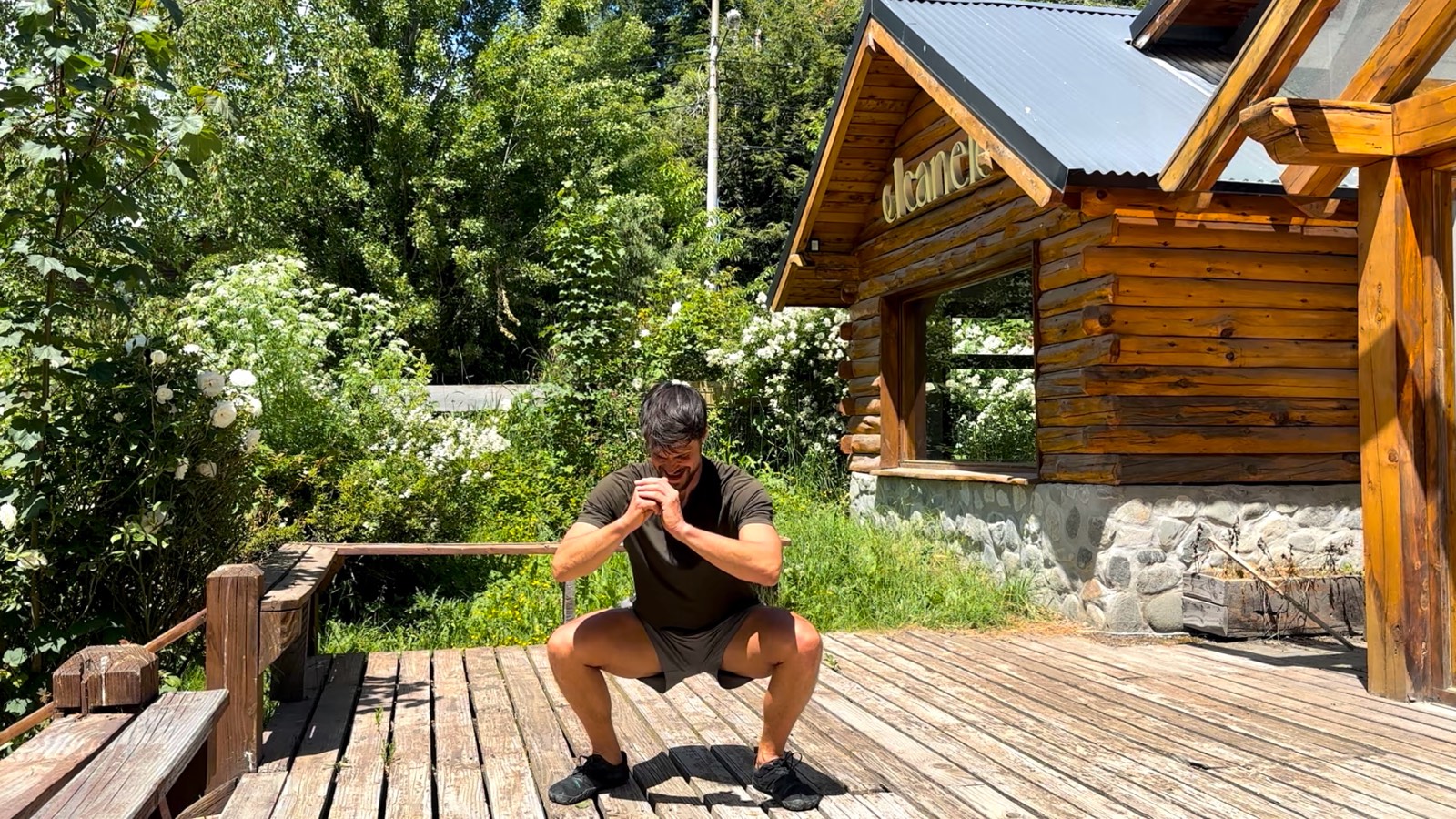
Returning to exercise
12 min · 6 rounds
30 sec brisk uphill walking or fast marching.
90 sec easy walking.
Effort: breathing noticeably harder, still able to speak in short sentences.
Building a base
15 min · 8 rounds
40 sec bodyweight work: squats, step-ups, or a low-impact alternative.
80 sec easy movement.
Effort: conversation becomes hard in the last 10 seconds of each round.
Already training
20 min · 5 rounds
3 min hard on a bike, rower or hill.
90 sec easy.
Effort: sustainable but uncomfortable. You should want it to end.
None of these are magic numbers. They are starting points. Change the exercise, the work time or the number of rounds until the session is demanding but still repeatable next week.
Structure, not supervision
Need some structure?
You do not need an app to start. A simple interval timer can be enough.
But an app can reduce the decisions by giving you exercises, work periods and recovery times. I have used platforms such as Freeletics, which make short bodyweight sessions easy to access without much equipment.
Not every workout in these apps is pure HIIT, and some sessions can become demanding. Use them for structure, but keep adapting the exercises, duration and intensity to your own level.
The app should guide your session, not override how your body feels.
The other side of it
When HIIT is not the right choice
There are weeks when adding intensity is the wrong move, and situations where it is not the right tool at all.
Check with a doctor first if you have a heart condition, uncontrolled blood pressure or any cardiovascular symptom during exercise, if you are pregnant or recently postpartum, if you are returning from injury or surgery without clearance, or if you are dealing with an illness or persistent unexplained fatigue.
And consider skipping the session, rather than only shortening it, when:
- You have slept badly several nights in a row.
- Your resting heart rate is noticeably elevated and stays there.
- You are already training hard and your performance is going backward.
- You feel wired but exhausted, rather than simply tired.
Interval training has been studied in people with cardiometabolic conditions and generally appears well tolerated when it is appropriately prescribed and supervised.4 That is not the same as it being the right choice for you, this week, without context.
Ten years in
What I actually do now
I still use HIIT because it gives me something other forms of exercise do not always provide. It lets me push, focus and release pressure. It can improve my cardiovascular capacity without requiring a long workout or a specific location.
But I do not use the same session every week. Sometimes I push harder. Sometimes I reduce the volume, choose a lower-impact option or replace it with easier movement.
The goal is not to copy the way I train. It is to understand whether intensity could help you, what dose you can recover from and how it fits the person you are today.